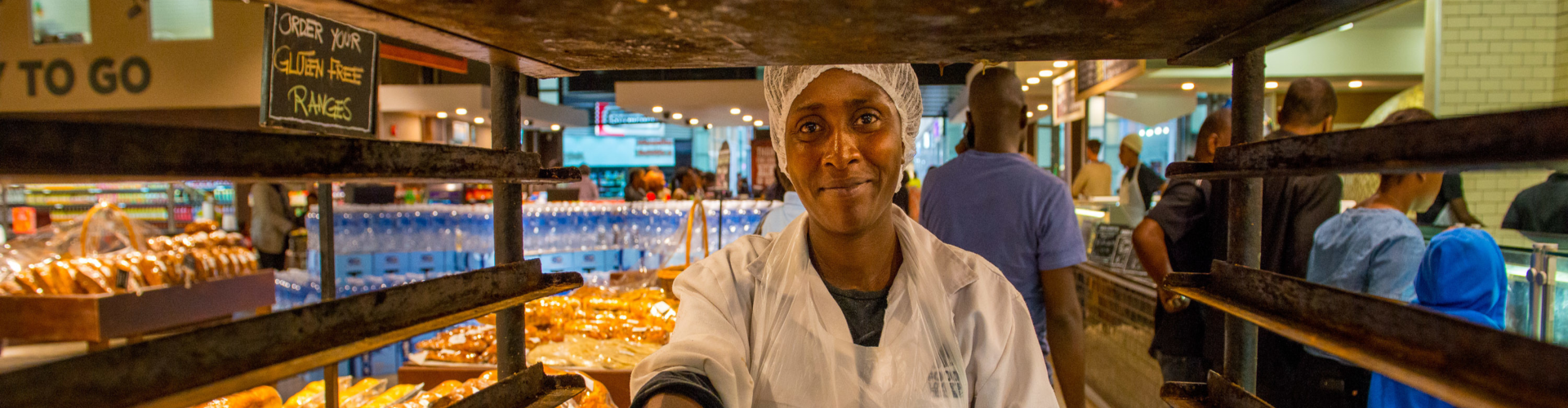

The Compact with Africa – Green Business Fund (CwA-GBF) helps small and medium-sized enterprises (SMEs) in Africa access climate finance to adopt and scale climate solutions.
Towards the broader Compact with Africa ambition of enabling a friendly environment for businesses and investors to mobilize private capital and create jobs, the Green Business Fund fills an important niche by focusing on SME-climate finance and climate resilience and mitigation nexus.
SMEs represent the greatest share of business and employment. They have potential to drive low-carbon growth in African countries that can be achieved through green and inclusive approaches to development. Yet, a lack of financing, supporting policies, and capacity often hinders climate-smart initiatives.
To overcome this challenge, the Compact with Africa– Green Business Fund supports SMEs by:
- Fostering an enabling environment for private investment in climate-smart initiatives.
- Building and supporting local capacity.
- Establishing innovative climate finance models that attract climate finance for local green businesses, bringing jobs and economic impact.
Since its inception, the fund has allocated over $25 million in technical assistance and pilot activities across CWA partner countries. The Fund does not operate in isolation. It is anchored in partnerships and strongly embedded within, and leverages, WBG country dialogue and operations.
How we deliver
GBF’s model creates an enabling environment for evidence-based cross-sectoral solutions.
- Inclusive policy dialogues on environment and finance, both at the country and regional level, convene policymakers and the private sector, and support peer-to-peer learning on climate-responsive solutions.
Timely analytical market studies have informed policy reforms and investments.
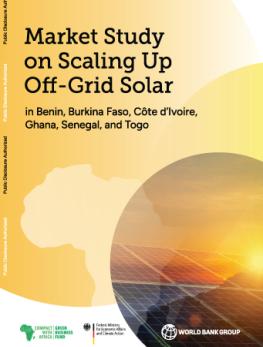
- A six-country market study revealed the critical barriers confronting the off-grid solar market and informed design of a risk-sharing facility for mobilizing SME investments in the solar off-grid value chain, The facility is currently being piloted under ROGEAP, the Regional Off-Grid Electricity Access Project in West Africa.
- In East Africa, similar work deepened understanding of climate-related business opportunities and risks for SMEs. A multi-country mapping of value chains examined the sustainability investments that generate the most value, highlighting insights such as the importance of residue management in reducing emissions in coffee value chains.
- Across the Democratic Republic of Congo (DRC), Ethiopia, Egypt and other countries, technical assistance grants have facilitated timely policy reforms. In DRC, enterprise survey data informed the design of a green finance window within the Partial Credit Guarantee Fund. In Egypt, analysis identified policy incentives and green financing opportunities for agri-SMEs to adopt and scale climate smart technologies.
GBF delivers tailored capacity development, tailored training programs, and tools.
- The flagship Sustainable Finance Knowledge Center, implemented in collaboration with IFC’s Green Bond Technical Assistance Program and partners, provides accredited virtual training and in-person programs on mobilization of climate finance and the transition to resilient development. Accessible to both the public and private sectors, the Center has equipped SMEs and financial institutions with the know-how to develop climate-smart business models, assess climate risks, design financial products, and prepare investment-ready project pipelines.
GBF’s goal is to serve as a catalyst, by promoting innovative financing instruments that complement concessional funding, such as risk-sharing, results-based climate financing, de-risking mechanisms, and financial incentives, as well as technical assistance, that can incentivize a wider range of financiers.
- Pilot interventions embedded in priority World Bank Group programs demonstrate how innovative financing instruments can unlock SMEs investments and private capital. Examples include a climate-smart agriculture initiative in Rwanda, CDAT RBCF, and a green resilient housing de-risking facility project, GRIHD, in East and Southern Africa.
By fostering predictable regulatory environment and tackling priority capacity gaps, the GBF reduces the perceived risk that has historically kept commercial lenders away from climate-smart SME finance. These efforts facilitate the downstream work of translating climate ambition into bankable opportunities and enable the effective deployment of financial solutions.
Impact areas
The priorities of the CwA Green Business Fund are aligned with the World Bank Group’s Next Generation Africa Climate Business Plan for transformational climate action on the continent. The CwA-GBF supports 6 priority impact areas through policy dialogue, analytical work, technical assistance, and pilot activities.

Food security and a resilient rural economy

Low carbon and resilient energy

Ecosystem stability and water security

Resilient cities and green mobility

Climate shocks and risk governance
Where does the fund operate?
The CwA-GBF operates in its 15 member countries.

Angola

Benin

Burkina Faso

Côte d'Ivoire

Democratic Republic of Congo

Egypt

Ethiopia

Ghana

Guinea

Morocco

Rwanda
Senegal

Togo

Tunisia

Zambia
Partners