
Countries are advancing carbon pricing and carbon markets in a context shaped by fiscal pressures, energy considerations, competitiveness concerns, and the need to mobilize investment and jobs. Many have moved into design and early implementation and are now facing more concrete policy choices and trade-offs. These include how to maintain policies that are workable in domestic contexts, manage competitiveness and economic impacts, and, where relevant, align approaches across countries and systems.
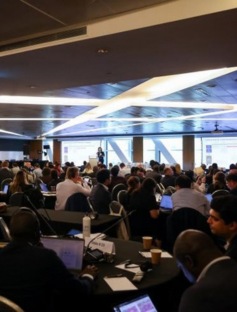
The Global Knowledge Forum on Carbon Pricing and Markets is a working platform for countries to exchange experience and focus on implementation as they progress and as the broader landscape evolves. Its objective is to help countries move forward in a practical way, by clarifying choices and identifying next steps. It brings together policymakers, their partners, and key stakeholders to discuss how they design instruments and address implementation constraints in practice.
The Forum is convened by the World Bank Group with support from the Partnership for Market Implementation (PMI) and carbon funds including the Transformative Carbon Asset Facility (TCAF), the Carbon Initiative for Development (Ci-Dev), the BioCarbon Fund Initiative for Sustainable Forest Landscapes (ISFL), and the Forest Carbon Partnership Facility (FCPF), together with critical contributions from a range of knowledge partners. These programs support countries across the carbon value chain, from policy development and implementation of carbon pricing to participation in carbon markets and transactions.
Summary Report
DAY 1
Advancing Carbon Pricing in a Challenging Global Context
Day 1 of the Forum will help countries to further the design and implementation of their domestic pricing systems. The agenda will focus on global trends, policy design lessons, interoperable market infrastructure solutions, and responses to emerging Border Carbon Adjustments, and highlight practical analytical tools that support evidence-based decision making.
9:00 am
WELCOME
Representatives from the World Bank Group (WBG) will welcome participants and set the stage for an interactive exchange of experiences among the growing PMI community.
- Katia Daude Goncalves, Country Manager, Singapore, WBG
- Luis Tineo, Manager, Policy & Analytics for Adaptation and Mitigation Finance, WBG
9:30 am
A1. MIND THE GAPS. Understanding the country-level needs: Where are we now and where are the gaps?
An opportunity for country participants to connect with each other, to share information on progress and challenges in advancing carbon pricing and markets, and to identify priority needs. Key insights will be reported back to the broader forum to inform action and coordination across the partnership.
- Facilitated by Pascal Saura, Senior Knowledge Management and Learning Officer, WBG
10:30 am
A2. PARTNERSHIPS. How is the PMI partnership helping?
In response to the ambitions expressed by country participants, this segment will position PMI within the broader context of current developments in carbon pricing and markets, highlight recent program progress, and describe the types of support countries can expect from the partnership.
- PMI Program update by Pierre Guigon, Program Manager, WBG
11:00 am
A3. COUNTRY EXPERIENCE. Lessons from Designing New Generation of Carbon Pricing Instruments
This session will dive into the experiences of governments that are designing or operationalizing new carbon pricing instruments. Country representatives will unpack the strategic and technical design decisions they confronted—such as scope, coverage, price trajectories, allocation approaches, strategies for integrating offsets and interactions with other policies. The discussion will surface cross-cutting lessons and highlight design questions that client countries should plan to assess over the coming year as they advance or refine their own carbon pricing instruments.
Speakers:
- Bingqing Lu, Deputy General Manager, Shanghai Environment and Energy Exchange, China
- Cyril Aboly, Legal Advisor, Ministry of Environment and Sustainable Development, Guinea
- Gabriela Santamaria, Carbon Specialist, Ministry of Environment, Panama
Moderated by Teresa Solozábal Gallego, Climate Change Office, Ministry for the Ecological Transition and the Demographic Challenge, Spain
12:00 pm
LUNCH BREAK
1:00 pm
A4. TRENDS. What global trends should be on our minds? Putting a price on carbon and enhancing climate action
Key developments have reshaped global carbon pricing over the past year, particularly the importance of fiscal sustainability, maintaining competitiveness, and creating enabling environments for investment and employment. Drawing on recent reforms and emerging carbon pricing instruments, the session will explore what governments aim to achieve—fiscal, environmental, and competitiveness-related goals—and how instruments are converging or diverging across regions in pursuit of these diverse objectives. The session will also help participants identify priority areas where greater alignment and cooperation can support more effective implementation in the medium term.
Presentation:
- Key findings of State and Trends of Carbon Pricing Report 2026 - Anthony Mansell, Climate Change Specialist, WBG
Speakers:
- Giovanna Naspolini, Head of Methodologies, Secretariat of Carbon Markets, Brazil
- Natsuki Sugiura, Assistant Director (Global Environmental Affairs), Ministry of Economy, Trade and Industry, Japan
- Yeshika Malik, Climate Change Specialist, World Bank Group
Moderated by Leon Heckmann, Carbon Market Expert, ICAP
2:00 pm
A5. FUTURE SHOCKS: Navigating Border Carbon Adjustments
This session will outline the current state of play on Border Carbon Adjustments, with a focus on the operational details and implications of the EU CBAM for exporters in exposed sectors. Country participants will examine compliance expectations and policy options to support domestic industries, manage competitiveness risks, and align national carbon pricing trajectories with emerging international requirements. The session will contribute to the development of a one-pager that level-sets understanding on current BCA implementation and provides a menu of options to guide countries’ response strategies.
Speakers:
- Helen Finney, Head of Carbon Market Programmes and Policy, Department for Energy Security and Net Zero, United Kingdom
- Sebastien Paquot, Head of Task Force for International Carbon Pricing and Markets Diplomacy, European Commission
- Madeleine Diouf Sarr, Director, Climate Change, Ecological Transition and Green Finance, Ministry of Environment and Ecological Transition, Senegal
- Mustafa Kemal Arsunar, Climate Change Expert, Ministry of Environment, Urbanisation and Climate Change, Türkiye
Moderated by Malin Ahlberg, Federal Ministry for the Environment, Climate Action, Nature Conservation & Nuclear Safety, Germany
3:15 pm
A6. INNOVATION. Implementation of Innovative Infrastructure Solutions
This session will explore how digitalization and standardization can strengthen data quality, reduce administrative burden, and support more responsive and interoperable carbon pricing systems. An interactive component will allow participants to benchmark their own Digital MRV readiness against a structured set of milestones and identify priority gaps to address as they modernize their MRV systems.
Speakers:
- Aliona Rusnac, Secretary of State, Ministry of Environment, Moldova
- Diana Guzmán Torres, Director of Climate Change Mitigation and Adaptation Policies, Ministry of Environment and Natural Resources, Mexico
- Wissarut Muangpluem, Environmentalist, Department of Climate Change, Ministry of Natural Resources and Environment, Thailand
- Lweembe Mwale, Project Officer, Climate Change Programme, COMESA
Moderated by Lorna Ritchie, Director of Public Affairs, Integrity Council for Voluntary Council Market (ICVCM)
4:00 pm
A7. SOLUTIONS SHOW & TELL. Interactive tour of carbon pricing tools and solutions
The day will conclude with an interactive showcase of PMI-developed tools designed to help countries plan, implement, and refine their carbon pricing policies.
5:00 pm
A8. TAKEAWAYS. What does it mean for Countries?
In group discussions, countries update each other based on three prompts:
- What have we learned today from the sessions and our peer-to-peer exchanges?
- What are our next steps?
- How can PMI and knowledge partners help fill capacity gaps for implementation?
Facilitated by Pascal Saura, WBG
6:00 pm
RECEPTION
DAY 2
Carbon Markets: Moving to Participation and Transactions
The sessions are dedicated to helping countries strengthen their readiness for international carbon markets by clarifying the evolving market architecture, the strategic choices associated with Article 6 authorization, and the technical, legal, and institutional foundations required for credible participation. Countries will identify practical strategies to navigate transactions, build interoperable infrastructure, and position themselves to capture emerging market opportunities while safeguarding integrity and domestic ambition.
9:00 am
WELCOME BACK. Icebreaker
Opening session to summarize insights from the previous day and set the objectives for Day 2.
9:10 am
INTRODUCTION: Joining Forces and Moving to Participation and Transactions. Power of global partnerships
- Olivier Mahul, Manager, Carbon Finance Solutions, WBG
- Luis Tineo, Manager, Climate Mitigation & Adaptation Finance, WBG
9:30 am
B1. GLOBAL DIALOGUE: State of International Carbon Markets and Seeing the Opportunities
The opening session on Day 2 will clarify how voluntary, compliance, and international carbon credit markets are evolving and converging, outlining key trends in demand, supply, and market governance. By demystifying the emerging architecture and its implications, the session will help countries understand where opportunities are emerging and what conditions are required to participate effectively and strategically.
Fireside Chat:
- H.E. Ambassador Ali Mohamed, Special Envoy for Climate Change, Executive Office of President, Kenya
- H.E. Marie Nyange Ndambo, Minister of Environment, Sustainable Development and New Climate Economy, Democratic Republic of the Congo
Moderated by Mark Kenber, Executive Director, VCMI
Knowledge Update:
- Seoyoung Lim, Program Officer, Mitigation, UNFCCC
- Harikumar Gadde, Senior Climate Change Specialist, WBG
Moderated by Virender K. Duggal, Head, Carbon Markets, Asian Development Bank
10:40am
B2. DECISIONS: Navigating Decisions on Carbon Markets
Authorization is a strategic and sovereign decision. This session will examine how countries are approaching decisions related to the authorization of credits for international transfer, including strategic, regulatory, and risk management considerations. Drawing on country experiences—particularly from those that have issued national carbon market regulations—participants will explore policy trade-offs and decision sequencing to decide whether, when, and how much to authorize. The discussion will focus on how to balance NDC ambition, protect domestic integrity, manage risks, and capture emerging market opportunities.
Knowledge Update
- Kazuhisa Koakutsu, Director, Article 6 Implementation Partnership
Case Studies:
- Frank Gwaba, Senior Climate Change Officer, Department of Environment & Climate Change, Ministry of Green Economy & Environment, Zambia
- Ousmane Fall Sarr, Coordinator, West African Alliance for Carbon Markets and Climate Finance
- Sarah Quek, Senior Assistant Director, International Trade (Green Economy and Sustainability) and Carbon Markets Division, Ministry of Trade and Industry, Singapore
Dialogue:
- Hugh Salway, Senior Director for Market Development and Partnerships, Gold Standard
- Fenella Aouane, Director and Head of Carbon Pricing, GGGI
Moderated by Kazuhisa Koakutsu, Director, Article 6 Implementation Partnership
12:10 pm
LUNCH BREAK
1:10 pm
B3. LEGAL IMPLEMENTATION: Approaches to Establishing Legal Nature of Carbon Credits
This essential session will include options to design a robust legal framework for carbon market access. This session will be presenting a clear menu of strategic options to decide the best fit for each country's unique context – by evaluating the best legal instruments for each country’s goals, whether that means drafting comprehensive new statutes or amending existing laws. Furthermore, the session will break down various institutional and governance models, comparing centralized versus delegated structures, to help countries make informed decisions on how to assign key functions like policy setting, authorizations, and registry management to build a stable, predictable, and highly attractive market environment.
Presentation:
- Fabiano de Andrade Correa, Senior Counsel, Environmental and International Law, WBG
Speakers:
- Sharlin Hemraj, Director for Environment & Fuel Taxes, National Treasury, South Africa
- Peter Zaman, Partner, HFW
- Mechael Werdofa Balcha, Senior Carbon market specialist, Ministry of Planning and Development, Ethiopia
- Zubair Ahmed Channa, Secretary, Environment, Climate Change and Coastal Development Department, Government of Sindh, Pakistan
Moderated by Flavia Rosembuj, Senior Counsel, Environment and International Law, WBG
2:25 pm
B4. TRANSACTIONS: Navigating Buyer Expectations and Intermediary Engagement to Unlock Carbon Market Opportunities
This session will equip client countries with a deeper understanding of buyer demands across different markets and explore available options for monetizing units. It will also help identify the capacities needed to conduct successful carbon market transactions.
Speakers:
- Juan Carlos Arrendonado Brun, Director of Knowledge, Policy & Advocacy, Abatable
- Rodrigo Bezerra, Head of Upstream Carbon Emissions, Hartree Partners
- Saurabh Joshi, Head of Origination & Strategic Partnerships, Climate Impact X (CIX)
Moderated by Basak Odemis, Principal Operations Officer, Carbon Finance Solutions, WBG
4:00 pm
B5. KNOWLEDGE MARKETPLACE
Day 2 will close with an interactive showcase of tools and solutions that support countries’ engagement in international carbon markets.
5:00 pm
B6. CLOSING REMARKS: Partnerships for Development
- One-sentence takeaways from a sample of different participants - Client countries, donors, partners
- WBG Climate Heads of Delegation - Luis Tineo & Olivier Mahul